Choosing the Best Bilingual Bedtime Stories for Kids
Choosing the Best Bilingual Bedtime Stories for Kids
Dec 31, 2025
How to Choose the Best Bilingual Bedtime Stories for Kids
Key Highlights
- Bilingual bedtime stories are a great way to introduce your child to a new language and enhance their language skills.
- Look for books with quality English translation and age-appropriate content to support learning.
- Features like audio components and comprehension questions make the reading experience more interactive and effective.
- Choosing stories with simple narratives and repetitive phrases helps build your child's vocabulary naturally.
- Many Spanish short stories for beginners focus on the present tense to simplify grammar and improve understanding.
- You can find these books at Canadian bookstores, online retailers, and digital library platforms.
Watch on YouTube
Introduction
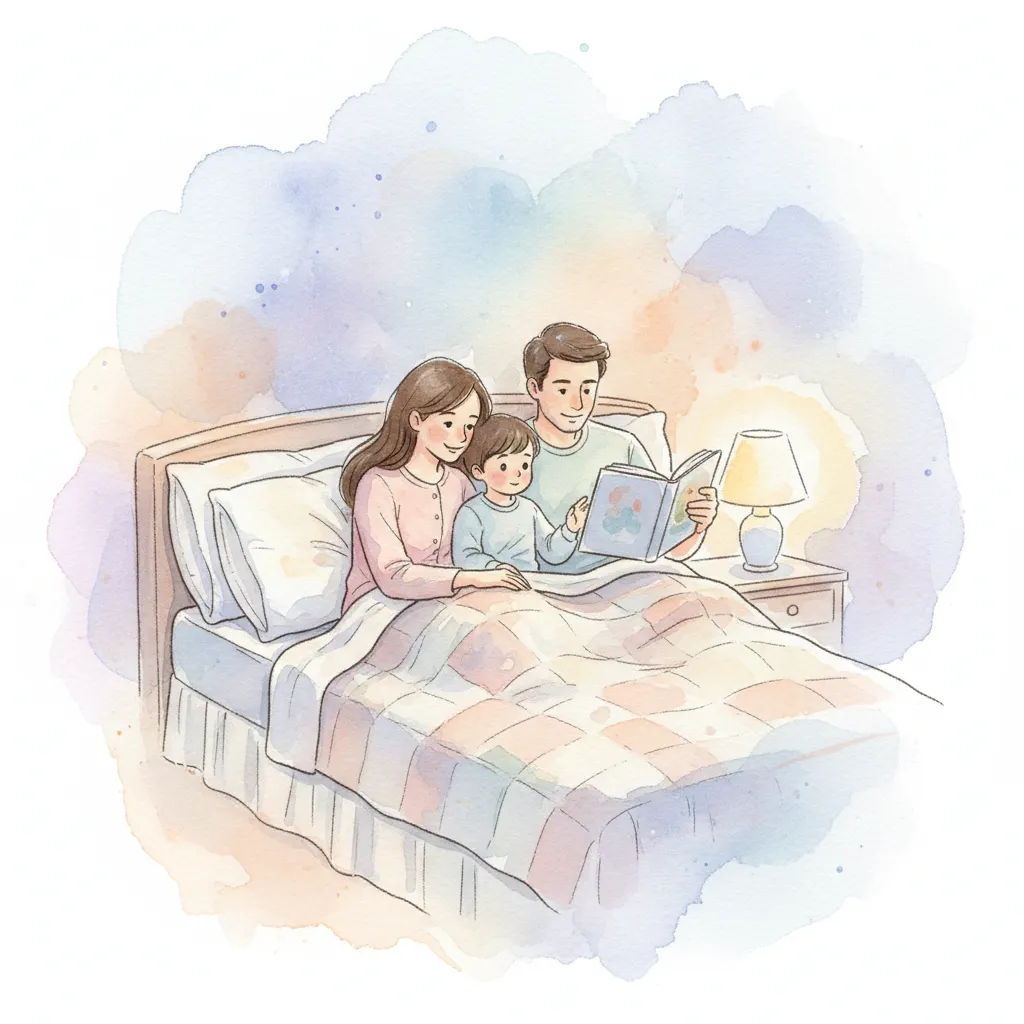
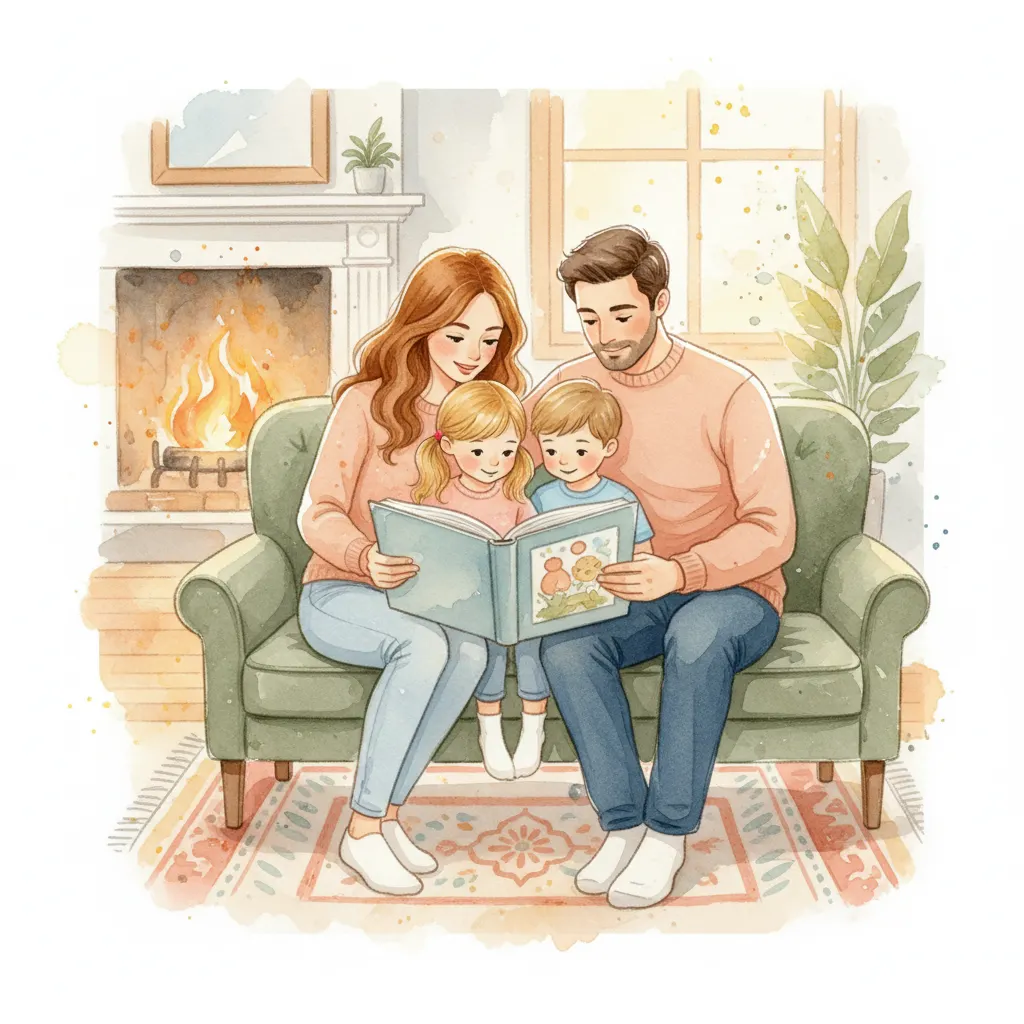
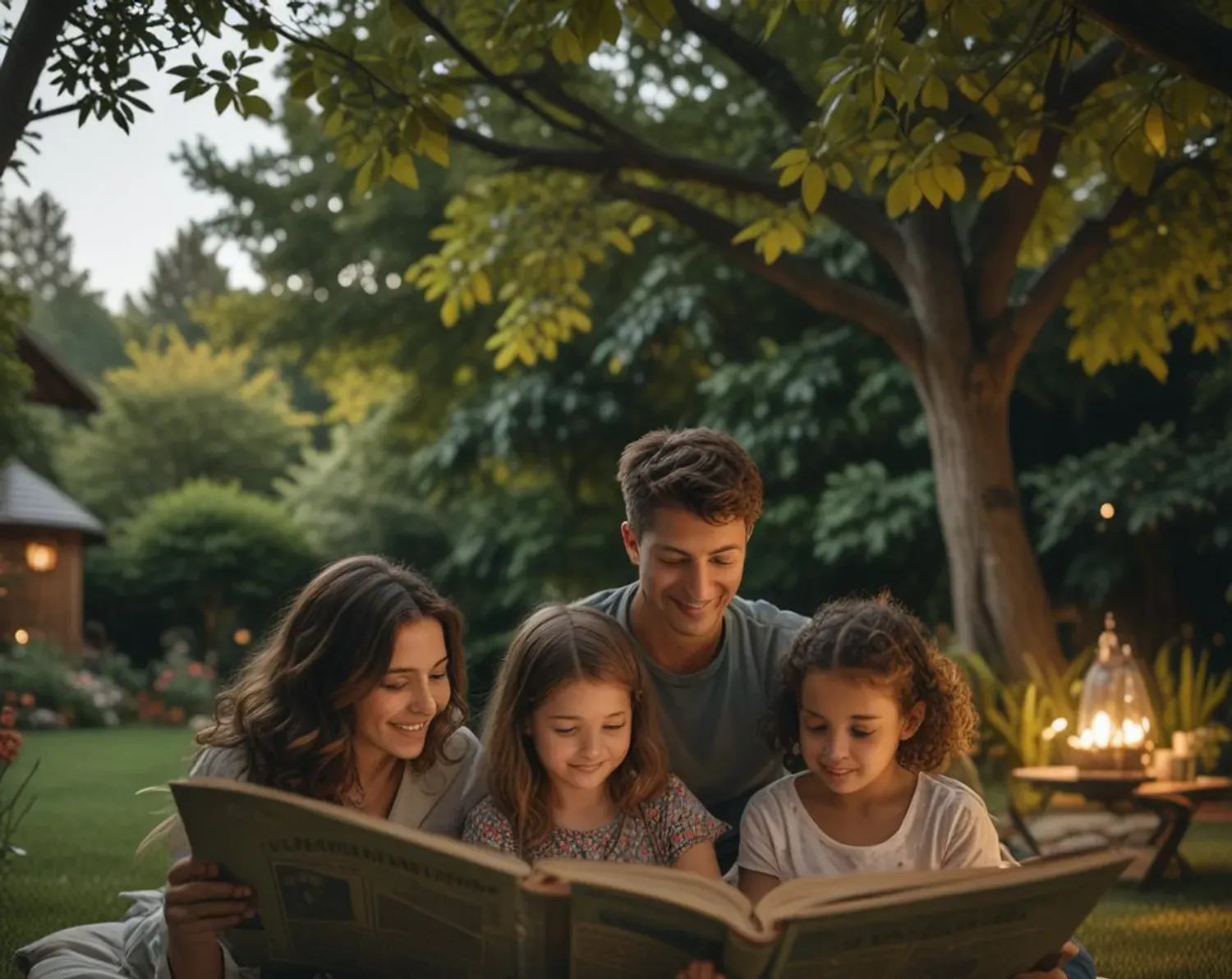
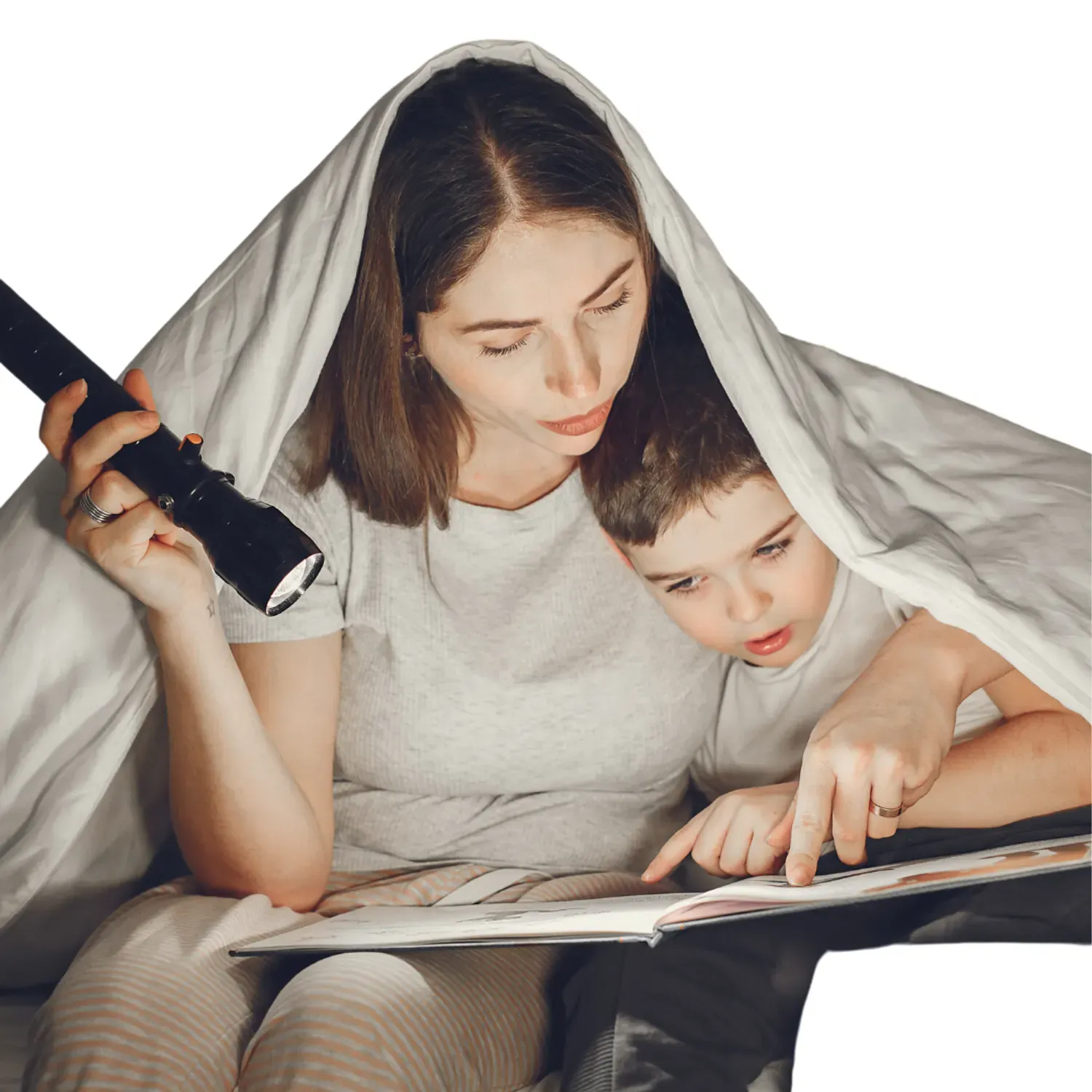
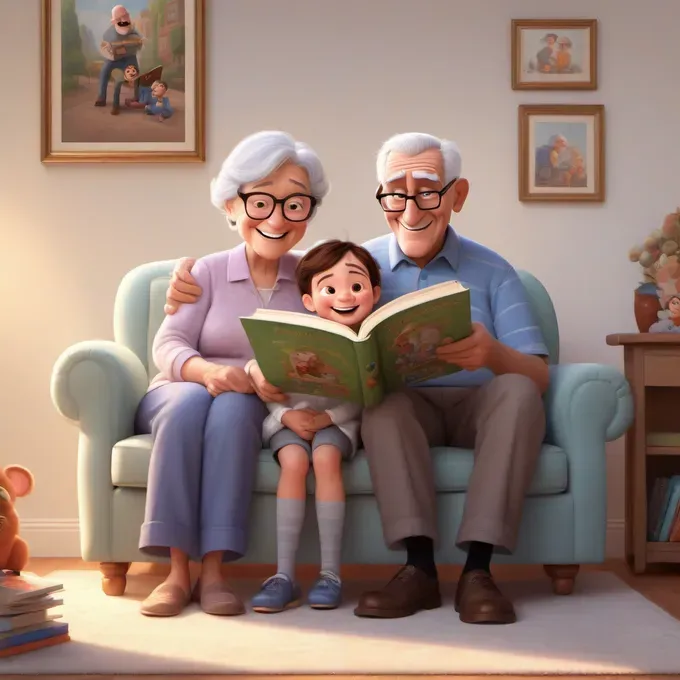
Sharing a story with your child at bedtime is a cherished tradition. What if that story could also open the door to a new language? Bilingual bedtime stories offer a wonderful opportunity for family bonding while nurturing early literacy and language development.
Whether you're exploring Spanish short stories with an English translation or another language pair, these books make learning a new language feel like a natural and enjoyable part of your daily routine. This guide will help you choose the perfect bilingual books for your little one.
Understanding Bilingual Bedtime Stories for Kids
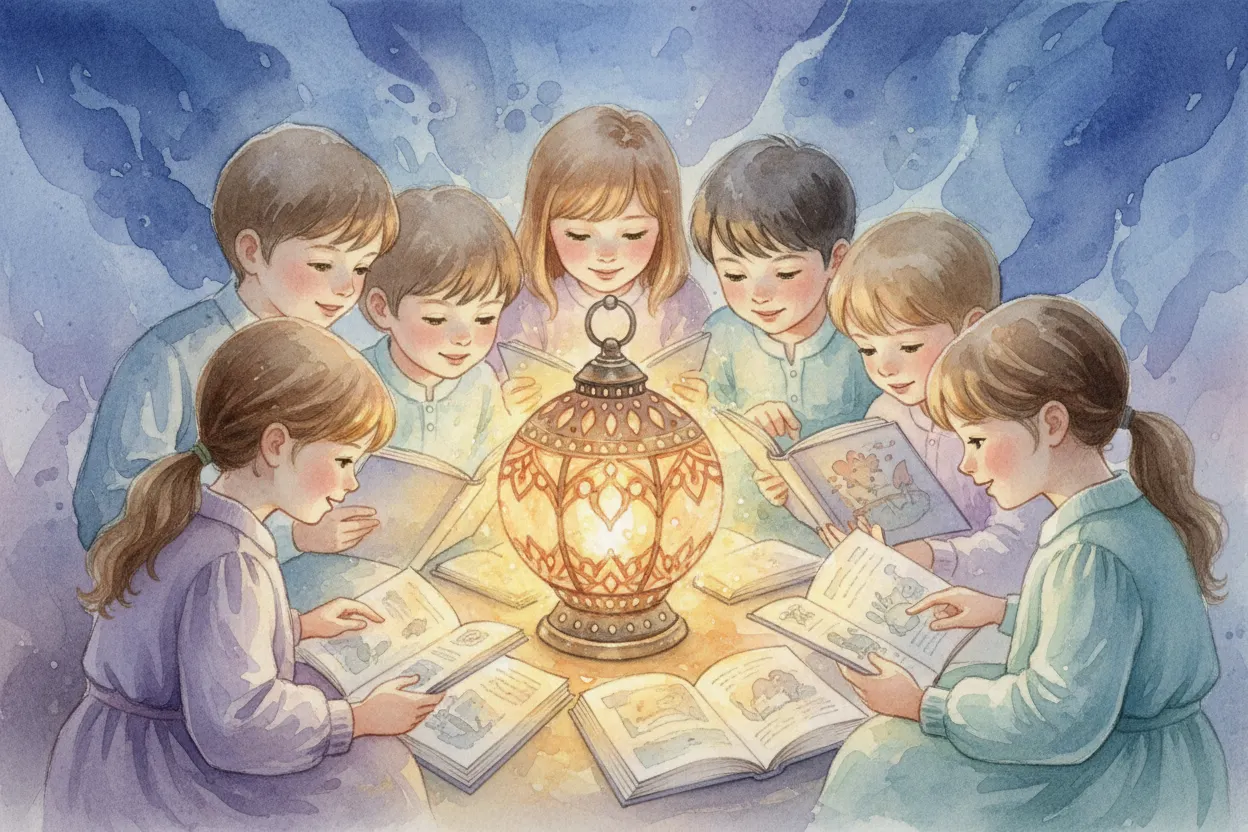
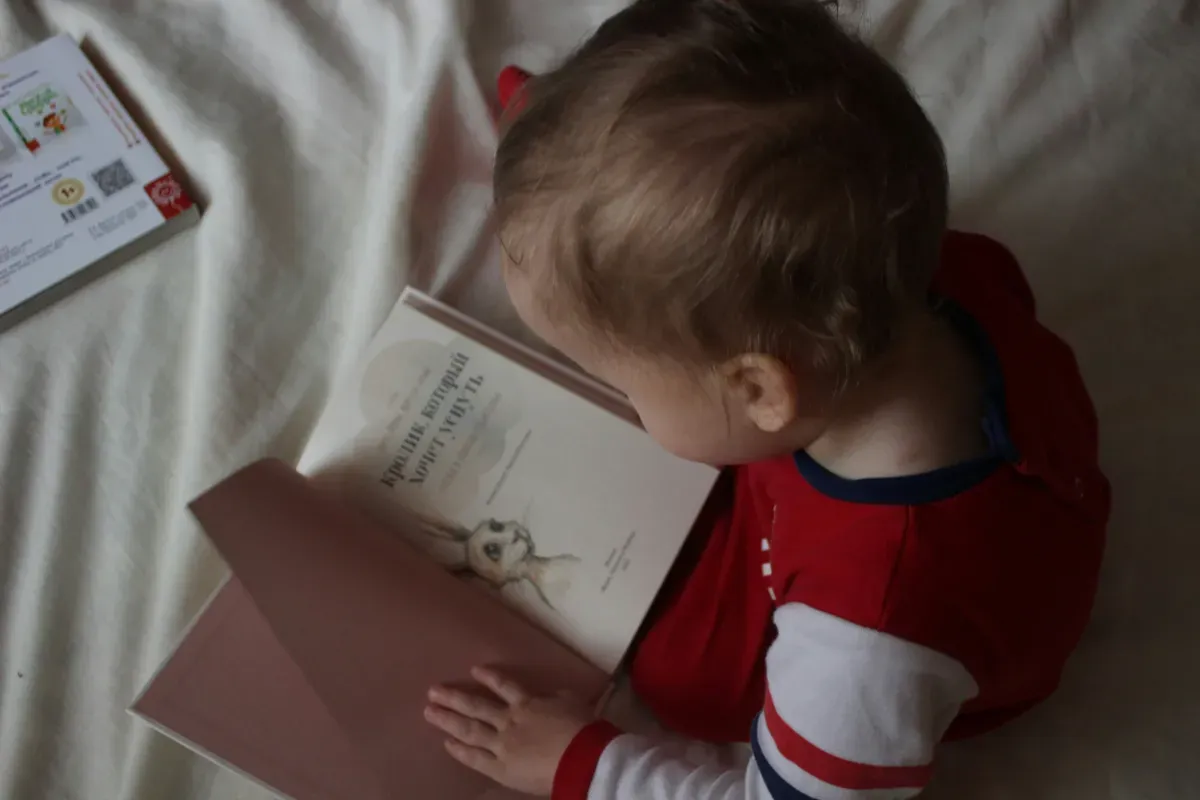
Bilingual bedtime stories are books that present a narrative in two different languages. They are designed to make reading an immersive language-learning experience. From simple Spanish short stories for beginners to more complex tales for advanced students, these books are powerful tools for expanding vocabulary and improving comprehension.
Regularly reading bilingual stories helps children connect words and ideas in both languages, reinforcing their understanding. This practice is not just about learning words; it’s about building a foundation for lifelong language skills and cognitive growth. Let's explore what makes a story truly bilingual and why it's so important.
What Makes a Story Bilingual?
A story becomes bilingual when it is presented in two languages, allowing readers to compare and learn simultaneously. This can be done in several formats, each offering a unique way to engage with the text. Some books feature the two languages side-by-side on the same page, while others might have one language on one page and the translation on the facing page.
Others might present a full chapter in one language, followed by the complete English translation. This structure is a fun way to build vocabulary and see grammar in action. Key features often include:
- A glossary of key terms for each chapter.
- A side-by-side or chapter-by-chapter translation.
- Comprehension questions to test understanding.
This dual-language approach removes the pressure of needing a dictionary for every new word. For example, many Spanish short stories are designed with a parallel text format, making it easy for a child to follow along and connect new words with their meanings, fostering confidence and making the learning process enjoyable.
The Importance of Bedtime Reading in Multiple Languages
Introducing a new language through bedtime reading offers significant benefits for early childhood development. It transforms learning from a structured task into a comforting and engaging activity. This shared experience not only strengthens your bond with your child but also boosts their cognitive flexibility and problem-solving abilities.
Reading stories that use simple grammar, such as focusing on the present tense, helps beginners grasp sentence structure without feeling overwhelmed. As children hear and see words in two languages, they begin to make natural connections, which enhances their overall language skills. The process of decoding a new language stimulates the brain in unique ways.
Many bilingual books also include tools like comprehension questions at the end of chapters. These prompts encourage critical thinking and ensure your child is actively engaging with the story's content. This method supports both language acquisition and deeper analytical skills, contributing positively to early literacy.
Key Benefits of Bilingual Bedtime Stories
Bilingual bedtime stories are more than just entertainment; they are a powerful educational resource that can significantly improve your child's language skills and cognitive abilities. By presenting a narrative in two languages, these books offer a unique learning experience that builds vocabulary and strengthens comprehension.
Many Spanish short stories, for instance, use the present tense and include comprehension questions to reinforce learning in a gentle, supportive way. The benefits extend beyond language, fostering cultural understanding and cognitive growth. Let's look closer at how these stories can support your child's development.
Supporting Language Development and Cognitive Growth
Reading stories in two languages is an incredibly effective way to enhance a child's language skills. It naturally expands their vocabulary in both their native tongue and the new language. When learners see words in context, they can infer meaning and understand nuances that a simple word list cannot provide.
This method also helps demystify grammar. Many bilingual books for beginners are written with simple sentence structures, allowing children to absorb grammatical rules intuitively. The repetition of common phrases and sentence patterns builds a strong foundation for speaking and writing.
Beyond language, this practice supports overall cognitive development in children. The brain works harder to switch between two linguistic systems, which can improve memory, attention, and problem-solving skills. This mental exercise helps young learners become more adaptable and creative thinkers.
Enhancing Cultural Awareness Through Storytelling
Stories are a window into other worlds, and bilingual books offer a direct look into different cultures. Through storytelling, children can explore traditions, perspectives, and ways of life that are different from their own. This exposure fosters empathy, curiosity, and a more global mindset from a young age.
For example, Spanish short stories might transport a reader to the vibrant streets of Córdoba or the mystical landscapes described by authors like Isabel Allende. These narratives are rich with cultural details that teach children about the history and values of Spanish-speaking communities around the world.
Whether a story is set in a bustling city like Paris or a quiet village in Mexico, it provides an authentic cultural context. This makes the language learning experience more meaningful and helps children understand that language is deeply connected to people and their heritage. It builds a bridge of understanding between your child and the wider world.

Types of Bilingual Short Stories for Children
The world of bilingual children's literature is vast and varied, with options available for every age and skill level. You can find everything from sturdy board books for toddlers to longer paperback stories for intermediate and advanced students. Many Spanish short stories come with a full English translation to guide the reader.
These books are designed to make language learning accessible and engaging. Formats differ, with some offering parallel text and others including supplementary materials like audio recordings. Understanding the different types available will help you find the perfect fit for your child’s learning journey.
Popular Languages and Combinations (Spanish-English, French-English, etc.)
While bilingual books are available in many language combinations, some are more common than others. Spanish-English is one of the most popular pairings, with a vast selection of Spanish short stories available for all reading levels. These books often come with a complete English translation, making them ideal for beginners.
For Canadian parents, French-English bilingual books are particularly valuable. Given that French and English are Canada's official languages, these stories are an excellent tool for fostering bilingualism from an early age. They support school curriculums and help children connect with a significant part of Canada's cultural identity.
Ultimately, the best language combination depends on your family's goals and heritage. Whether you choose Spanish, French, or another language, the key is to find stories that are engaging and supportive. This helps build not just language skills but also a lasting love for reading and learning.
Interactive Stories with Audio and Visual Elements
Interactive features can transform a simple story into a dynamic learning tool. Many modern bilingual books incorporate audio and visual elements to make learning a fun way to spend time together. These additions are especially helpful for auditory and visual learners, as they provide multiple ways to absorb new information.
Audio recordings are a fantastic resource for mastering pronunciation. Hearing a native speaker read the story helps children and parents alike understand the correct intonation and rhythm of the language. Some digital platforms and books offer audio that can be played at different speeds, which is perfect for beginners. Other interactive elements include:
- Rich illustrations that provide context clues.
- Comprehension questions to prompt discussion.
- Built-in vocabulary flashcards or glossaries.
These features help reinforce new vocabulary and ensure that your child is not just passively listening but actively engaging with the material. This multi-sensory approach deepens understanding and makes the learning process more memorable.
Essential Features to Look for in Bilingual Bedtime Books
When selecting a bilingual bedtime book, it's important to look beyond the cover. The right features can make a significant difference in your child's learning experience. You want a book that builds vocabulary without requiring a dictionary for every other word, and one that is appropriate for your child's age and attention span.
Classic tales retold in a bilingual format, like the story of Goldilocks, can be a great starting point because of their familiarity. Pay attention to the book's structure, illustrations, and language level to ensure it's a good match. Let’s explore some of these essential features in more detail.
Age Appropriateness and Reading Level
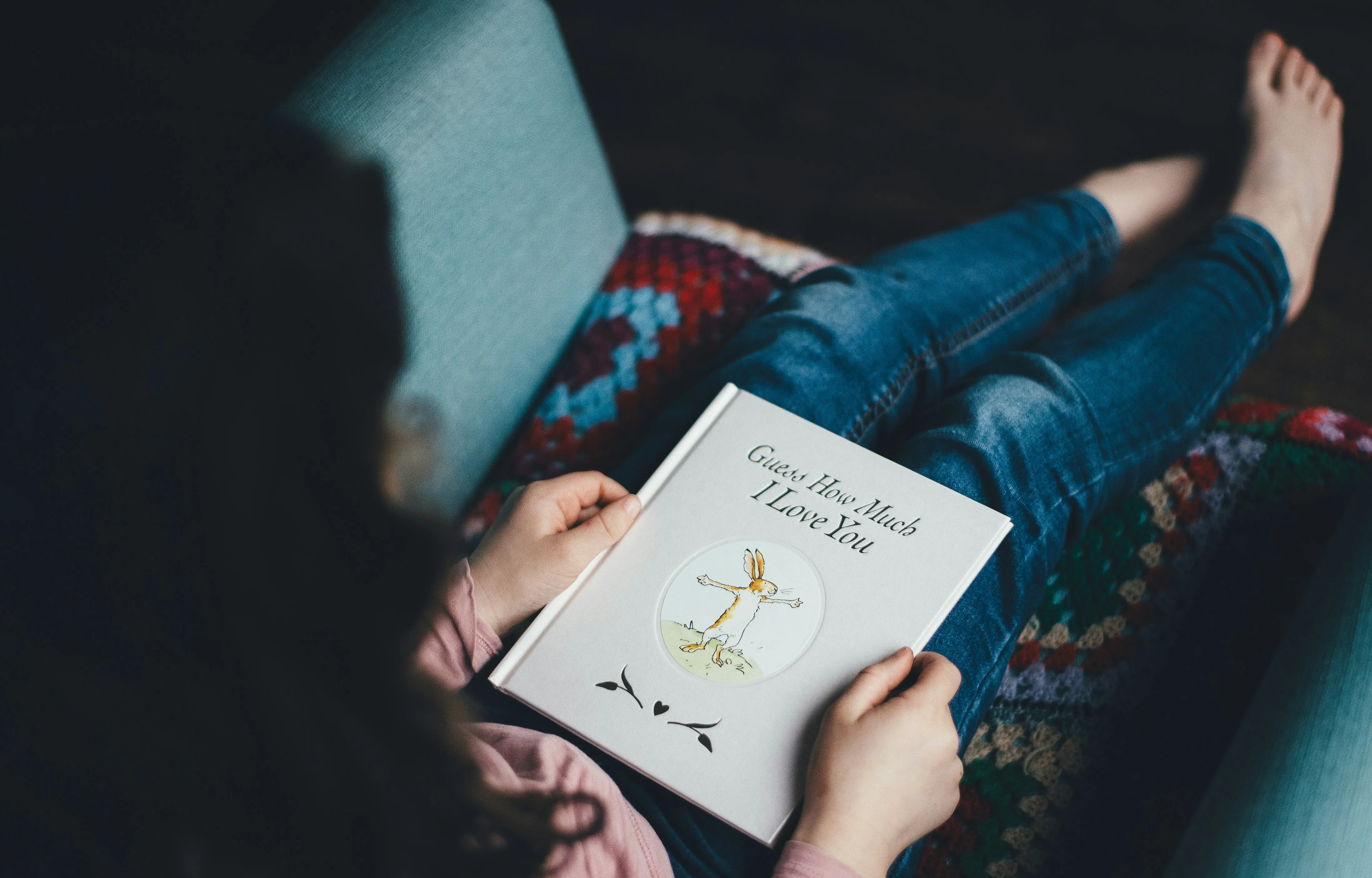
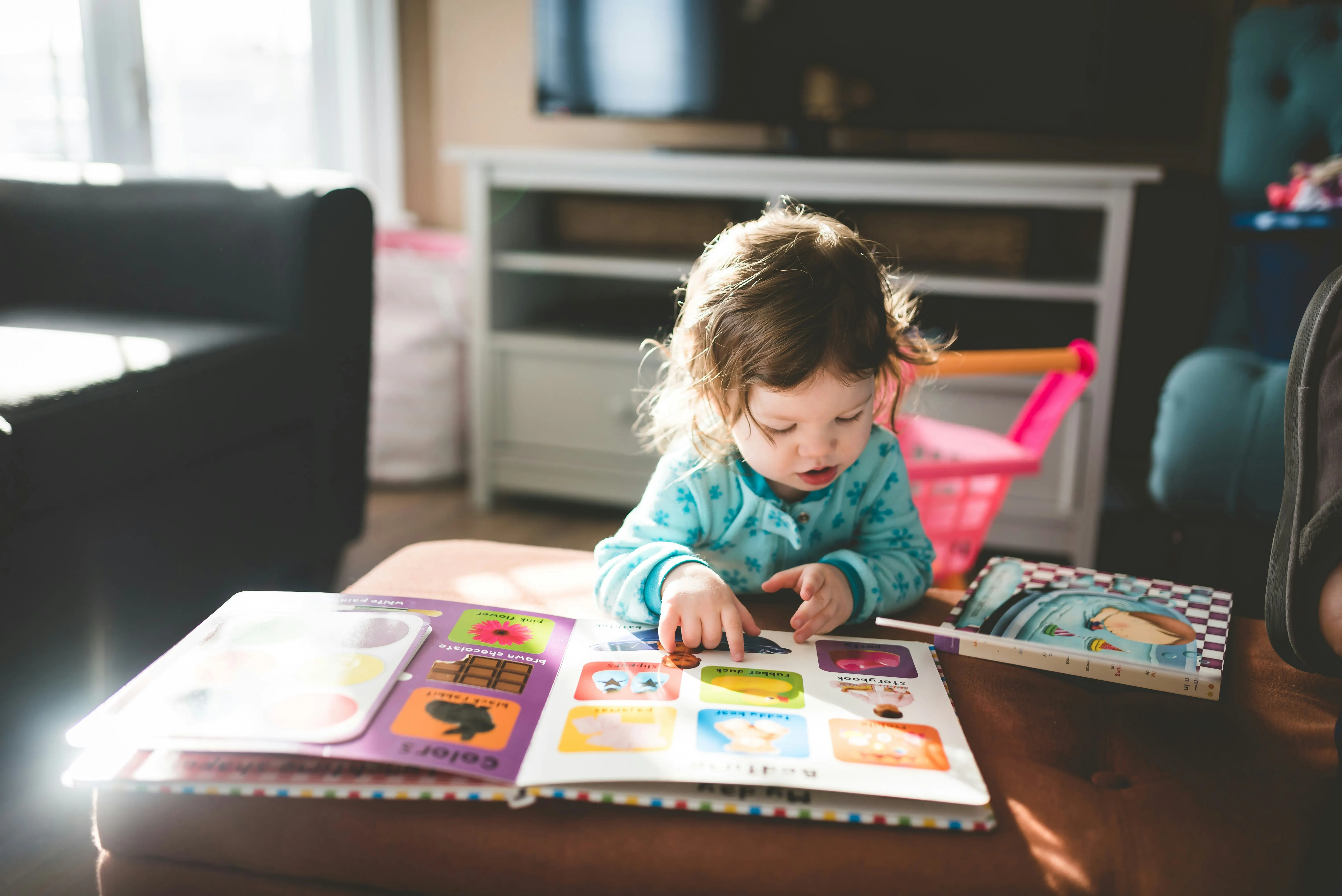
Choosing a book that matches your child's age and developmental stage is crucial for a positive reading experience. A story that is too simple may be boring, while one that is too complex can be frustrating. For very young children, look for durable board books with simple, high-contrast illustrations and just a few words per page.
As your child grows, you can move on to paperback books with more complex sentences and a richer vocabulary. The goal is to introduce the new language in a way that feels achievable and rewarding. Consider these general guidelines:
- Ages 0-2: Board books with one or two words per page, focusing on everyday objects and concepts.
- Ages 3-5: Picture books with simple, repetitive sentences. This is a great age for preschool learning activities centred around stories.
- Ages 6+: Short stories with more developed plots and chapter books for more advanced readers.
Assessing your child’s current proficiency in the new language is also important. If they are just starting, choose books designed for absolute beginners to build their confidence.

Engaging Illustrations and Simple Narratives
Vibrant and engaging illustrations are a key component of a great children's book, especially in a bilingual context. Pictures provide valuable context clues that help children understand the story even if they don't know every word. They act as a visual dictionary, connecting objects and actions to new vocabulary.
Simple narratives are just as important for beginner learners. Stories with a clear, straightforward plot and repetitive phrases, like the classic tale of Goldilocks ("Ricitos de oro"), help reinforce language patterns. This repetition makes it easier for children to remember new words and sentence structures.
When the story is easy to follow, children can focus their mental energy on absorbing the new language. These types of stories build confidence and make the reading experience enjoyable rather than overwhelming. The combination of beautiful art and a simple plot creates a powerful and effective learning environment.
Beginner’s Guide: How to Choose the Best Bilingual Bedtime Stories
Choosing your child’s first bilingual book can feel like a big decision, but it doesn’t have to be complicated. The goal is to find stories that are enjoyable and educational, making the introduction to a new language a fun way to learn. For the first time, focus on books that capture your child’s interest.
Whether you opt for Spanish short stories or another language, a few simple steps can guide you to the perfect choice. This beginner's guide will walk you through what you need and how to select a story that your child will love.
What You’ll Need to Get Started (Books, Online Platforms, Audio Resources)
To begin your bilingual reading journey, you only need a few key resources. The most obvious starting point is the book itself. You can find a wide selection of paperback and hardcover bilingual books in local bookshops and from online retailers.
In addition to physical books, many online platforms offer digital bilingual stories. Some of these sites are specifically designed for language learners and include interactive features. Audio resources are also incredibly valuable. Look for books that come with a CD or a link to an online audio recording. Having these tools ready can make learning more effective:
- A selection of age-appropriate bilingual books.
- Access to online story platforms or apps.
- A simple bilingual dictionary for quick look-ups, though many books are designed to be used without one.
Having a mix of physical and digital resources gives you flexibility. You can read a paperback at bedtime and use an online story with audio during playtime for a well-rounded approach.

Step-by-Step Guide to Selecting the Right Story
Finding the right bilingual story involves considering your child's needs and the features of the book. A systematic approach can help you make an informed choice that sets your child up for success. The key is to balance educational value with entertainment.
Start by thinking about your child's age, interests, and current language level. Then, examine the book's content, looking for features that support learning, such as simple grammar (like the present tense), clear vocabulary, and helpful tools like comprehension questions.
This table summarises a simple, four-step process to guide your selection. Following these steps will help you find a book that is both fun and effective for language development.
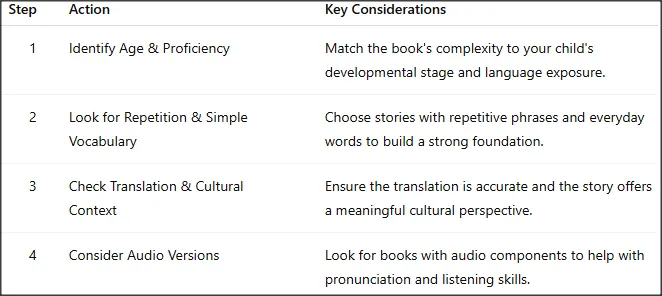
Step 1: Identify Your Child’s Age and Language Proficiency
The first and most important step is to consider your child. A book's effectiveness depends entirely on whether it resonates with its reader. Start by assessing your child's age and developmental milestones. Is your child a toddler who responds best to sensory play activities, or a preschooler working on preschool readiness?
For very young learners, choose books with durable pages, bright images, and minimal text. The goal at this age is exposure to the sounds of the new language, not complex comprehension. As children get older, they can handle more intricate plots and a wider range of vocabulary.
Also, think about your child’s current familiarity with the new language. Are they absolute beginners, or do they have some prior exposure? For new learners, books written specifically for beginners will build confidence. For those with some experience, an intermediate story can provide a healthy challenge.
Step 2: Explore Stories with Repetitive Phrases and Everyday Vocabulary
Repetition is a cornerstone of language acquisition, especially for young children. When choosing a bilingual story, look for narratives that feature repetitive phrases or refrains. This predictability helps children anticipate what's coming next, making it easier for them to join in and practice new words.
Focus on stories that use everyday vocabulary. Books centred on topics like family, animals, food, or daily routines are perfect for building a practical word bank. Many books for Spanish learners are designed this way, focusing on core words that can be used in real-life conversations. The grammar should also be simple, often using the present tense to avoid confusion.
Look for books that intentionally support vocabulary building. Helpful features include:
- A glossary at the beginning or end of a chapter.
- Highlighted key words within the text.
- Illustrations that clearly depict the meaning of new words.
This approach ensures that learning new vocabulary is an integrated and natural part of the reading experience.
Step 3: Check for Quality Translations and Cultural Relevance
A high-quality translation is essential for a bilingual book to be an effective learning tool. A poor translation can be confusing and may teach incorrect grammar or phrasing. Look for books from reputable publishers or authors known for their work in bilingual education. The English translation should flow naturally and accurately reflect the meaning of the original text.
Cultural relevance is another key factor. A good bilingual story does more than just translate words; it provides a glimpse into another culture. This context makes the language come alive and gives it deeper meaning.
Choose stories that authentically represent the culture they come from, whether it's a tale by a celebrated author like Isabel Allende or a simple story about life in a city like Paris. This cultural immersion enriches the learning process, fostering a greater appreciation for diversity and the people who speak the language your child is learning.
Step 4: Consider Audio Versions for Enhanced Learning
Incorporating an audio component can significantly boost the learning potential of bilingual stories. Listening to a native speaker helps children develop an authentic accent and understand the natural rhythm of the language. It provides a correct model for pronunciation that parents who are not native speakers might not be able to offer.
Many books now come with accompanying audio, either on a CD, as a scannable QR code, or through an associated app. These resources allow your child to listen to the story while following along in the book, reinforcing the connection between the written and spoken word.
Some audio resources also include interactive exercises, like read-aloud prompts or simple comprehension questions. These features make the experience more engaging and help solidify learning. When you’re searching for books, keep an eye out for those that mention an audio version for a more complete and immersive language experience.
Where to Find Bilingual Short Stories and Bedtime Books in Canada
For Canadian parents looking to purchase bilingual books, there are plenty of accessible options. You can find a great selection of paperback Spanish short stories and other language combinations at major bookstores across the country.
These stores often have dedicated sections for foreign language learning or children's educational materials, making it easy to browse titles in person.
In addition to brick-and-mortar shops, online retailers offer an even wider variety.
Websites for Canadian booksellers and large international platforms provide extensive catalogues of bilingual books that can be delivered right to your door. Digital platforms and libraries also offer many choices, some of which are free to access. Let's look at where you can start your search.
Bookshops and Online Retailers Specialising in Bilingual Books
Finding bilingual books in Canada is easier than ever. Many local and national bookstores stock a variety of titles for language learners. Retailers like Indigo, for example, carry a range of paperback Spanish short stories and other bilingual books suitable for children.
Online retailers are another excellent resource, offering a massive selection that you might not find in a physical store. You can search specifically for the language combination and age level you need. Many of these sites feature customer reviews, which can help you gauge the quality of a book before you buy it.
Here are a few places to start your search:
- Large national bookstores like Indigo.
- Independent local bookshops, which may have curated children's sections.
- Major online marketplaces like Amazon.ca, which lists many bilingual authors.
These options provide plenty of opportunities to find the perfect book for your family's language learning journey.
Library Programmes and Digital Story Platforms
Your local library is a treasure trove of resources for language learning. Most libraries have a collection of bilingual books for children, and you can often request titles they don't currently have in stock. Libraries are a fantastic, cost-effective way to explore different stories and authors without committing to a purchase.
In addition to physical books, many library systems offer access to digital platforms like OverDrive or Libby, where you can borrow e-books and audiobooks for free with your library card. There are also dedicated online platforms that offer bilingual stories. Websites like the International Children’s Digital Library and Lingua host stories in many languages.
These digital resources often include interactive features, such as audio narration and comprehension questions, to enhance the learning experience. Exploring these platforms can provide your child with a rich and varied supply of reading material in your target language.
Related Articles
Explore the Magic of Story Lantern for Kids
Embrace the Spirit: Countdown to Christmas Activities
Best Picture Books for Kids: Winter Solstice Months
Conclusion
In conclusion, choosing the right bilingual bedtime stories for your kids is a rewarding journey that can significantly aid their language development and cultural understanding. By focusing on age-appropriate narratives, engaging illustrations, and quality translations, you can ensure that your child not only enjoys storytime but also benefits from the rich experience of learning in multiple languages. The right stories can foster a love for reading and create cherished moments before sleep. For additional guidance tailored to your child’s needs, don't hesitate to get a free consultation with our experts to help you choose the perfect bilingual tales.
Frequently Asked Questions
Are there bilingual bedtime stories suitable for very young children?
Yes, there are many bilingual stories designed for very young children. Look for sturdy board books with simple illustrations and one or two words per page. These books focus on foundational vocabulary and a comforting rhythm rather than complex grammar, making them perfect for the youngest learners.
Can I find bilingual short stories with audio for kids?
Absolutely. Many bilingual books, especially Spanish short stories, come with audio components. These are a fun way to help with pronunciation and listening skills. Some digital versions even include interactive comprehension questions, making the learning experience more engaging and effective for children.
What are the best languages for bilingual bedtime stories in Canada?
In Canada, English-French bilingual stories are very popular due to the country's official languages. Spanish-English books are also widely available and are an excellent choice for introducing a new language. The selection of Spanish short stories with English translation ranges from beginner to advanced students, offering options for every level.
How do bilingual bedtime stories help with language learning?
Bilingual stories boost language skills by presenting new vocabulary in a meaningful context, which reduces the need for a dictionary. For Spanish learners, seeing words side-by-side with their translation improves comprehension. Features like repetition and comprehension questions help reinforce memory and build confidence in using the new language.
Reference:
https://kokotree.com/blog/bedtime-stories/bedtime-stories-language-acquisition
https://app.scarlettpanda.com/libraries/curated/bilingual-bedtime-stories
https://www.scrively.com/blog/stories-that-speak-two-languages-best-bilingual-family-books/

Written with Augmented Intelligence and SHiNER The Human